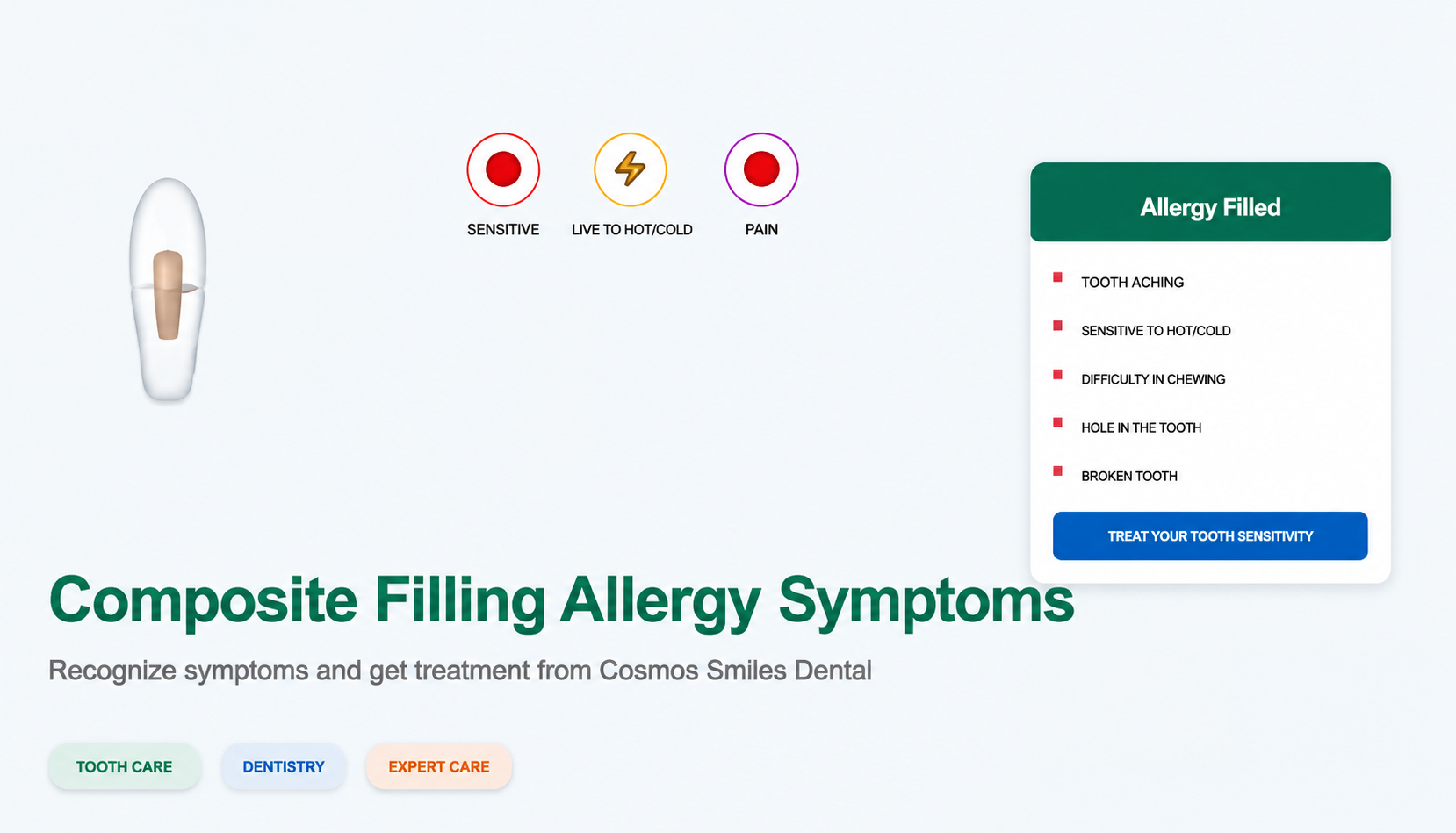
Composite fillings are tooth-colored and look natural, but some people develop allergic reactions to the materials. Understanding the symptoms helps you get treatment quickly and protect your oral health.
Step 1: Recognize Immediate Allergic Reactions
Watch for symptoms right after your filling appointment. These happen within minutes to hours.
What to look for:
- Swelling in your lips, tongue, or throat
- Itching or burning in your mouth
- Difficulty breathing (seek emergency care immediately)
- Hives or rash around your lips
- Severe pain at the filling site
Most dentists screen for allergies before placement, but reactions still occur. If you experience any of these, call your dentist right away. Don’t wait to see if it passes.
Step 2: Identify Delayed Allergic Reactions
Some allergies develop days or weeks after getting a composite filling. These are less dramatic but still uncomfortable.
Common delayed symptoms include:
- Constant mouth sensitivity to hot and cold
- Metallic taste that won’t go away
- Persistent inflammation around the filling
- Gum soreness and redness
- Mouth ulcers are forming near the filling
- Itching that feels worse at night
The resin in composite fillings contains compounds like bisphenol A (BPA) and methacrylate that trigger delayed reactions. Keep a diary of when symptoms started—this helps your dentist identify the problem.
Step 3: Track Reactions Beyond Your Mouth
Sometimes composite filling allergies show up in unexpected places.
Watch for these signs:
- Skin irritation on your face or neck
- Eczema-like rashes appearing suddenly
- Contact dermatitis if you touch your face frequently
- Headaches that started after the procedure
- General fatigue or malaise
These systemic symptoms are rarer but real. They suggest the composite material is triggering a broader immune response. Document these symptoms carefully because they help your dentist understand the severity.
Pro Tip: Keep a symptom log with dates and times. Note what triggers flare-ups—eating certain foods, touching your face, or stress. This information helps your dentist decide whether to replace the filling or manage the reaction with medication.
Step 4: Get Professional Diagnosis and Testing
Visit your dentist as soon as symptoms appear. Professional testing confirms whether it’s actually an allergy.
What your dentist will do:
- Examine the filling and surrounding tissue
- Take an oral history of when symptoms started
- Perform patch testing (applies tiny amounts of composite materials to check reactions)
- Order allergy tests if needed
- Rule out other causes like decay or infection
Diagnosis takes time, so be patient. Your dentist might recommend a temporary solution while testing happens. Never ignore persistent symptoms, thinking they’ll resolve alone.
Step 5: Discuss Replacement Options
If you have a confirmed composite filling allergy, ask about alternatives.
Common replacement materials:
- Glass ionomer cement (fluoride-releasing, hypoallergenic)
- Resin-modified glass ionomer (middle ground option)
- Gold or metal crowns (durable, rarely cause allergies)
- Ceramic or porcelain fillings (aesthetic and safe)
- Temporary fillings while you research options
Each material has pros and cons. Your dentist will explain which works best for your tooth location and situation.
Step 6: Manage Symptoms While Waiting
Don’t suffer through discomfort while making decisions about replacement.
Relief strategies:
- Rinse with salt water three times daily to reduce inflammation
- Take over-the-counter antihistamines if swelling occurs
- Avoid very hot foods and beverages that trigger sensitivity
- Use a soft toothbrush and gentle technique
- Apply topical anesthetic gels if pain is severe
- Sleep with your head elevated to reduce nighttime swelling
These are temporary solutions, not cures. They buy you time while you arrange proper treatment.
Frequently Asked Questions
Q: How common are composite filling allergies?
A: True allergic reactions occur in less than 1% of patients. Most mouth sensitivity after fillings is due to micro-leaks or pulp irritation, not allergy.
Q: What component causes most composite allergic reactions?
A: Methacrylates (especially BIS-GMA and TEGDMA) are the most common culprits. Some people also react to bisphenol A (BPA) in the resin.
Q: Can I prevent composite filling allergies?
A: Tell your dentist about any previous reactions to adhesives, plastics, or dental materials. Discuss hypoallergenic composite options if you have sensitive skin.
Q: How long does it take for symptoms to appear after filling placement?
A: Immediate reactions happen within hours. Delayed reactions typically appear between 3 and 21 days after placement.
Q: Is it safe to replace my filling immediately after diagnosis?
A: Dentists usually wait 1-2 weeks to let the inflammation reduce first. This makes removal easier and healing faster.
Take Action Today
If you think you have a composite filling allergy, contact Cosmos Smiles Dental immediately. Don’t assume your symptoms are normal—sensitivity and swelling deserve professional evaluation.
Our team can identify what’s causing your discomfort and recommend the right solution. We offer allergy testing, material alternatives, and gentle replacement procedures tailored to your needs.
Book your appointment now. Call us or use our online scheduling system. Describe your symptoms so we can prioritize your care. Your oral health is too important to ignore.
Your perfect smile shouldn’t come with allergic reactions. Let’s fix this together.
