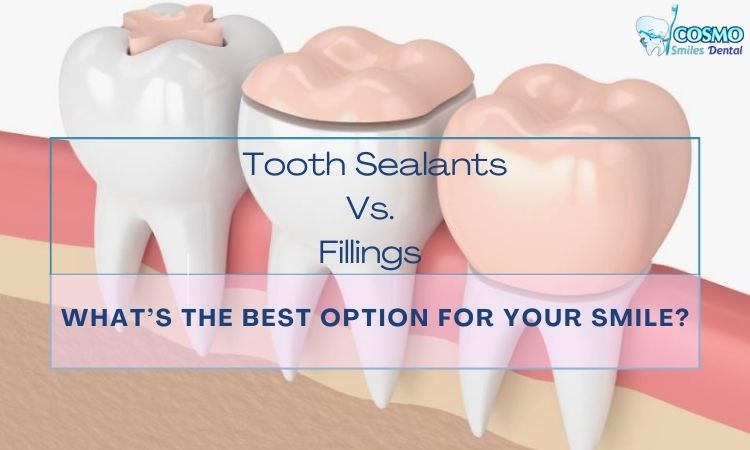
Keeping your teeth strong and healthy isn’t just about brushing and flossing—it’s also about choosing the right dental treatments at the right time. When it comes to cavity protection and repair, two of the most common options are tooth sealants and dental fillings.
At Cosmo Smiles Dental, we often get asked: “Which one is better for me?”
The answer depends on whether you want to prevent cavities or treat them after they appear. Let’s break it down in simple terms so you can make the best choice for your smile.
What Are Tooth Sealants?
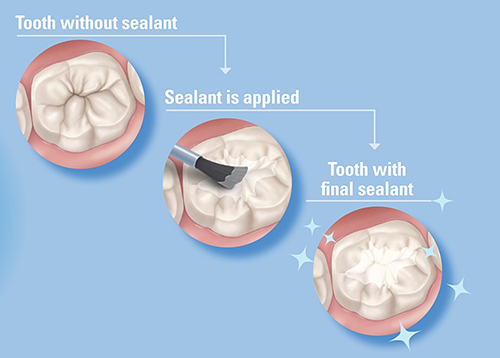
Think of tooth sealants as a raincoat for your teeth. They’re thin, protective coatings applied to the back molars, which are the most cavity-prone because of their deep grooves. Once placed, sealants block food and bacteria from settling into those tiny pits.
- When they are most effective: Children, teenagers, and adults who are susceptible to cavities
- Comfort factor: No drilling, no anesthesia—just a quick, painless application
- Expected lifespan: About 3 to 7 years with adequate care
👉 Learn more about how sealants protect teeth in our guide on tooth sealants in Arlington.
What Are Dental Fillings?
Fillings are different—they don’t prevent cavities, they fix them. When a tooth is damaged by decay, the dentist removes the decayed portion and fills it to restore the tooth. This keeps the tooth strong and stops the cavity from spreading further.
- When they help most: Any patient with a cavity or small fracture
- Comfort factor: Requires drilling, often with local anesthesia
- How long they last: The duration is 7 to 15 years, which varies with the material.
Common materials include tooth-colored composites, silver amalgam, or longer-lasting porcelain options.
Sealants vs. Fillings: How They Compare
| Feature | Sealants | Fillings |
| Purpose | Prevent cavities | Repair cavities |
| Procedure | Simple, painless | Needs drilling and decay removal |
| Best suited for | Healthy teeth with deep grooves | Teeth with active decay |
| Cost | Lower upfront | Higher (due to treatment complexity) |
| Longevity | 3–7 years | 7–15 years depending on material |
Which Option Should You Choose?
- Go for sealants if your teeth are still healthy but at risk of decay.
- Choose fillings if you currently have cavities that need to be treated.
In many cases, people benefit from both—sealants to stop future cavities and fillings if decay develops later on.
Lifestyle and Age Considerations
- Children & Teens: Sealants are highly recommended since younger teeth are more prone to cavities.
- Adults: Fillings are common, but sealants may still help if you have deep grooves or recurring decay.
- Frequent snacking or sweet drinks: Sealants can offer added protection.
Tooth Sealants Cost Insights in Arlington, VA
Sealants are typically less expensive than fillings since they’re preventive. Fillings cost more due to the restorative process, materials, and time involved.
👉 Curious about pricing? Check our full breakdown: How Much Do Tooth Sealants Cost in Arlington, VA?
Not Just for Kids
Sealants are often linked with children, but adults can benefit too. If you have deep grooves in your molars, a history of cavities, or frequent snacking habits, sealants provide an extra layer of protection. They create smoother surfaces, making teeth easier to clean and less prone to decay—helping adults prevent costly fillings and maintain healthier smiles for years.
👉 Explore more in our blog: Are tooth sealants just for kids?
Expertise You Can Trust
At Cosmo Smiles Dental, your care is guided by Dr. Ajinder Kaur, DDS. With advanced training in general, surgical, and cosmetic dentistry, Dr. Kaur brings years of experience—from performing complex oral surgeries to helping families maintain lifelong healthy smiles. Having completed her residency at Truman Medical Center in Kansas City and practicing extensively in Boston before moving to Northern Virginia, she blends expertise with a compassionate, patient-focused approach.
Her philosophy is simple: dentistry should not just treat problems but prevent them—making the choice between sealants and fillings part of a bigger plan for long-term oral health.
Final Thoughts
Sealants and fillings are both essential components of dental care. Sealants aim to prevent issues, while fillings are intended for repairing damage. The best choice depends on your current oral health.
At Cosmo Smiles Dental, Dr. Ajinder Kaur, DDS and her team take the time to evaluate your unique needs and recommend the right option for lasting protection and confidence in your smile.
👉 Ready to protect or restore your smile? Schedule your appointment with our Arlington Dental office today and let our team help you choose between sealants or fillings for the healthiest long-term results.
FAQs
1. Do sealants hurt to apply?
Not at all. The process is quick, painless, and doesn’t require anesthesia.
2. Can sealants replace fillings?
No. Sealants only prevent decay—they can’t repair existing cavities.
3. How long do sealants and fillings last?
Sealants last around 3–7 years; fillings last 7–15 years depending on the material.
4: Which looks more natural?
B.th can be tooth-colored. Composite fillings and clear sealants blend in seamlessly.
5. Which is more cost-effective long-term?
Sealants often save money by preventing cavities that would later require fillings or more complex treatments.
