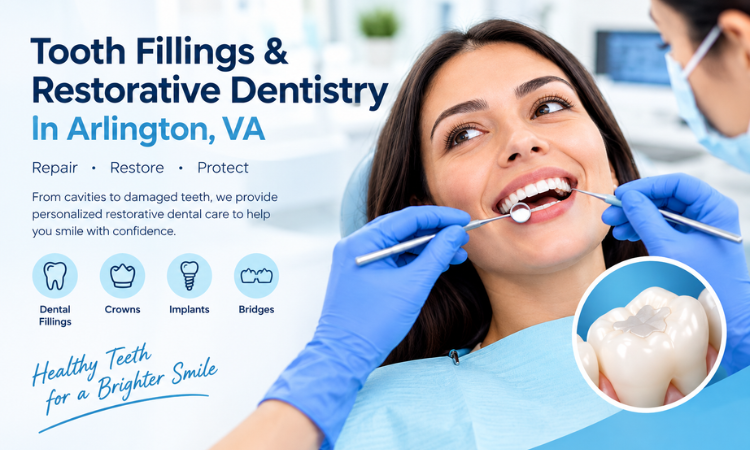
A cavity, cracked tooth, worn filling, or other dental damage can affect much more than the appearance of your smile. When a tooth is weakened, everyday activities such as chewing and eating can become uncomfortable, and untreated decay may continue to damage the tooth.
Tooth fillings and restorative dentistry in Arlington, VA can help repair damaged teeth, restore normal function, and preserve as much healthy tooth structure as possible.
At Cosmo Smiles Dental, we provide personalized restorative dental care designed around each patient’s oral health needs. Depending on the condition of your tooth, treatment may involve a dental filling, crown, bridge, implant, or another restorative option.
What Is Restorative Dentistry?
Restorative dentistry focuses on repairing or replacing teeth that have been affected by decay, damage, wear, or tooth loss.
The goal is not simply to improve the appearance of a tooth. A properly planned restoration should also help restore its function and support long-term oral health.
Restorative dental treatments may include:
- Tooth-colored composite fillings
- Dental crowns
- Dental bridges
- Dental implants
- Dentures
- Other treatments used to repair or replace damaged teeth
The appropriate treatment depends on factors such as the amount of healthy tooth structure remaining, the location and size of the damage, your oral health, and your individual treatment goals.
When Do You Need a Dental Filling?
A dental filling is commonly used to repair a tooth affected by a cavity or localized decay. Your dentist may recommend a filling when the damaged area can be restored without requiring a larger restoration.
Possible signs that you may need a dental evaluation include:
- Tooth sensitivity to hot or cold
- Pain when biting or chewing
- A visible hole or dark area on a tooth
- Food repeatedly becoming trapped around a tooth
- A chipped or damaged area of a tooth
- A cavity identified during a routine dental examination
It is important to remember that cavities do not always cause symptoms in their early stages. Regular dental examinations can help identify decay before it develops into a more extensive problem.
Tooth-Colored Composite Fillings
Many patients prefer tooth-colored fillings because they can be matched to the natural shade of the tooth.
Composite resin is one type of direct restorative material used for dental fillings. Unlike a laboratory-made restoration, a direct filling material is placed directly into the prepared tooth.
The American Dental Association identifies resin-based composite as one of the primary materials used for direct restorations. Material selection should be based on the individual clinical situation rather than a one-size-fits-all approach.
At Cosmo Smiles Dental, tooth-colored fillings are used to restore appropriate cavities while keeping the restoration as natural-looking as possible.
What Happens During a Tooth Filling?
The exact procedure varies according to the tooth and the extent of the decay, but a typical filling appointment may include several steps.
- Examination: Your dentist examines the tooth and evaluates the extent of the damage. Diagnostic imaging may be recommended when appropriate.
- Comfort and Preparation: Local anesthesia may be used to keep the treatment comfortable. The affected tooth is prepared so the damaged portion can be addressed.
- Removal of Decay: The dentist removes the decayed portion of the tooth and prepares the area for restoration.
- Filling the Tooth: The selected restorative material is placed into the prepared area and shaped to restore the tooth.
- Bite Check: Your dentist checks how the restored tooth contacts the opposing teeth and makes adjustments when necessary.
The objective is to create a restoration that supports both function and appearance while preserving healthy tooth structure whenever possible.
When Is a Crown Better Than a Filling?
Not every damaged tooth can be repaired with a filling.
If a tooth has extensive decay, significant structural damage, or insufficient healthy tooth structure to support a filling, your dentist may recommend a dental crown or another restorative treatment.
A crown covers and protects the remaining tooth structure. In other situations, a bridge, implant, or denture may be considered when a tooth cannot be saved or has already been lost.
The best restoration depends on the condition of the individual tooth. Your dentist can explain the available options and their advantages, limitations, and expected maintenance.
How Long Do Dental Fillings Last?
There is no single lifespan that applies to every dental filling.
The longevity of a restoration can be influenced by:
- The size and location of the filling
- The material used
- Chewing and biting forces
- Oral hygiene
- Diet and frequency of sugar exposure
- Tooth grinding or clenching
- New or recurrent tooth decay
- Regular dental examinations
Research reviewed by the American Dental Association shows that different restorative materials have different properties, strengths, indications, and limitations.
Regular dental visits allow your dentist to monitor existing restorations and identify problems before they become more extensive.
How Can You Protect Your Restored Teeth?
A filling or other restoration repairs existing damage, but it does not make the tooth immune to future decay.
To help protect your teeth:
- Brush twice daily with fluoride toothpaste.
- Clean between your teeth every day.
- Limit frequent consumption of sugary foods and drinks.
- Attend regular dental examinations and cleanings.
- Tell your dentist about sensitivity, pain, or changes around a filling.
- Follow any personalized recommendations provided by your dental team.
Preventive care is an important part of restorative dentistry because protecting your remaining healthy tooth structure can help reduce the need for more extensive treatment.

Restorative Dentistry in Arlington, VA
At Cosmo Smiles Dental, restorative care is part of a comprehensive approach to dental health. The practice provides fillings as well as crowns, bridges, dental implants, dentures, and other general and restorative services.
Rather than recommending the same treatment for every patient, the goal is to evaluate the condition of your teeth and explain the options that may be appropriate for your needs.
If you are experiencing tooth sensitivity, discomfort, a damaged tooth, or have been told that you have a cavity, an examination can help determine whether a filling or another restorative treatment is appropriate.
Looking for restorative dentistry in Arlington? Contact Cosmo Smiles Dental to schedule an appointment and discuss your dental concerns with the team.
Protect Your Smile with Personalized Restorative Dental Care
A damaged or decayed tooth does not always mean you need extensive treatment. When addressed early, appropriate restorative care may help preserve the tooth and restore comfortable function.
If you are searching for tooth fillings or restorative dentistry in Arlington, VA, Cosmo Smiles Dental can evaluate your dental needs and explain the treatment options available for your smile.
Schedule an appointment with Cosmo Smiles Dental to take the next step toward maintaining healthy, functional teeth.
Frequently Asked Questions
1. Are tooth-colored fillings better than metal fillings?
There is no single filling material that is best for every patient or every tooth. Tooth-colored composite fillings are popular because they can provide a natural appearance, while other materials may be appropriate in different clinical situations. Your dentist can recommend an option based on the tooth, the extent of damage, your oral health, and your preferences.
2. Does getting a dental filling hurt?
A dentist may use local anesthesia during a filling procedure to help keep the treatment comfortable. If you are nervous about dental treatment, discuss your concerns with your dental team before the procedure.
3. Can a filling repair a cracked tooth?
It depends on the location and extent of the crack. Minor damage may sometimes be restored with a filling or bonding, while a more extensively damaged tooth may require a crown or another treatment.
4. How do I know whether I need a filling or a crown?
The answer depends on how much healthy tooth structure remains and how extensive the damage is. A dental examination allows your dentist to determine whether a filling can adequately restore the tooth or whether a stronger restoration may be needed.
5. Can a cavity go away on its own?
A developed cavity generally requires professional evaluation and treatment. Early non-cavitated tooth decay may sometimes be managed with preventive approaches, depending on the individual situation. Once a cavity has progressed to a cavitated lesion, restorative treatment may be necessary. The ADA’s evidence-based guidance addresses restorative treatment for carious lesions in both primary and permanent teeth.
6. How can I make my dental filling last longer?
Good daily oral hygiene, regular dental visits, limiting frequent sugar exposure, and addressing problems such as grinding or clenching can help protect your restoration. Your dentist can also monitor the filling during routine examinations.
7. When should I see a dentist about a possible cavity?
You should schedule a dental evaluation if you notice tooth sensitivity, pain, discomfort when chewing, a visible hole or dark spot, or any other change in a tooth. Even without symptoms, regular dental examinations are important because early decay may not be noticeable.
